
I started to use the term ‘Gig Economy’ before I had half a clue what it meant – I was that idiot. So here are a few things about it that might bring some clarity:
Definition and Background:
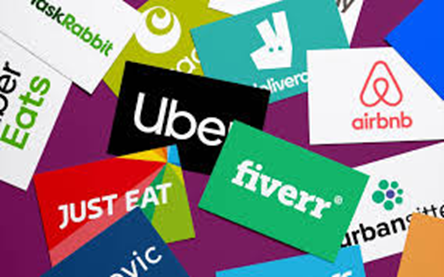
The term ‘Gig Economy’ was coined during the 2009 financial crisis and referred to the emerging business models embracing the new technologies and on-line platforms in particular. ‘Gigging’ had its roots in the 1920s Jazz scene where musicians were hired for one off performances and paid on a casual basis[1]. Similarly, workers within the Gig Economy tended to be self-employed on contracts that were often temporary, zero-hour, low-paid and without benefits such as sick and holiday pay and pension contributions. With the rise in unemployment at the time of the recession, workers were often obliged to work a number of part-time jobs to make ends meet. This also co-incided with UK government policy post 2010 to privatise many areas of the Public Sector by contracting services out. There was a fanfare of kick-starting business innovation, entrepreneurship and creativity coupled with a ready pool of increasingly cheap (and de-regulated) labour. So the UK witnessed the rise of companies such as Uber and platforms like Amazon, Airbnb and Etsy, whilst other businesses took advantage of contracting out to reduce costs (think delivery – eg., M&S, Deliveroo, DPD etc.)
Why is this significant?
Anybody concerned with emerging trends in business, careers, employment, employability and young people in particular should be taking note. The speed of the expansion of the Gig Economy has taken many by surprise. A recent article in the Guardian by Richard Partington reported that there are now nearly 5 million workers in the Gig Economy[2]. Research carried out by Herts University found that 1 in 10 workers do ‘gig’ work every week. This has doubled in 3 years. 60% of these workers are aged 16-34[3]. The work is wide-ranging and includes, for example, couriers, deliveries, taxis, office work, design, software development, cleaning and household repairs. Neither is the Gig Economy confined to the UK – the USA and Europe report similar trends. Hot off the press – Deliveroo, for example, operates in 13 countries – including Australia, Belgium, France, Hong Kong, Italy, Ireland, the Netherlands, Singapore, Spain and the United Arab Emirates[4].
Winners and Losers: It’s not that simple…….
Entrepreneurs and Shareholders: They say that nature hates a vacuum and it seems the economy is no different. The gaps in the market created by the decline in many sectors, together with loosening employment regulation has given rapid rise to the so-called Unicorn companies – tech companies that have reached $1billion market value (eg. Uber, Airbnb). But there’s high risk with rapid expansion – Deliveroo for example is facing a loss of £232 million this year despite doubling its operation[5].
Workers: For some who find it difficult to access the traditional job market the Gig Economy is a way in to get valuable work experience with fewer recuitment barriers, which may explain why young people are over-represented in the statistics. However, for those who need a living wage from it, it’s not a good long-term option. Weekly and monthly income fluctuates and is often insecure, leaving vulnerabilities around housing and bills. Foodbank data shows that many more families who are working are accessing their services – under-employment is a growing feature in our economy which skews the official employment data. There are some workers, however, who like the zero-hour flexibility but these tend to be those for whom the Gig Economy is a useful supplement to their main income. In addition, goods and services providers such as artists, crafters, clothing retailers often prefer to work in this freelance way.
The Government: There’s no doubt that the Gig Economy increasingly contributes to the UK GDP, (although I’ve yet to see a figure put on this). There should be the additional benefit of taxation both from businesses and workers but we know that collecting what’s owed is easier said than done. Underemployment remains a concern. For example, a pilot in the West of England, ‘Future Bright’ which is an initiative to support this group into full-time work, has just been extended.
The need for regulation: The push-back has started. The unions have been active, with court cases against high profile companies such as Uber gaining traction and local authorities refusing to renew licences to operate. Individual stories in the media, such as the death in 2017 of Don Lane, a DPD driver, have also highlighted the poor working conditions. The government has indicated that it is committed to forming future regulations, but a no-deal Brexit (apologies for mentioning it) threatens to sever the links with the EU – a long term protector of employment rights.
Job seekers may not have the luxury of avoiding the Gig
Economy but take care to see it as a short-term stepping stone to more
rewarding, better paid, more secure work that provides sick, holiday and
pension pay. And don’t forget to check whether you will need to pay tax!
[1] Financial Times 2015 https://www.ft.com/content/b5a2b122-a41b-11e5-8218-6b8ff73aae15
[2] Richard Partington Guardian Newspaper 28.6.19
[3] University of Hertfordshire 2016 https://www.herts.ac.uk/about-us/news/2019/june/uks-gig-economy-workforce-has-doubled-since-2016,-university-of-hertfordshire-research-shows
[4] Sarah Butler Guardian Newspaper 3.10.19
[5] Sarah Butler https://www.theguardian.com/business/2019/oct/02/deliveroo-makes-232m-loss-despite-doubling-its-operation
Dear Ros, I found this blog most enlightening and important. Thank you for highlighting this awfulness. Love, Marge
It seems to me that the official employment statistics should be clear as to what ’employment’ means. People I meet who are in the gig economy are often not employed at all in the older sense of the word, just earning (vital) day-to-day cash while they are looking for a ‘proper’ job. They are often being exploited by employers because decent jobs with appropriate pay and conditions are not on offer, even when companies could afford them.