
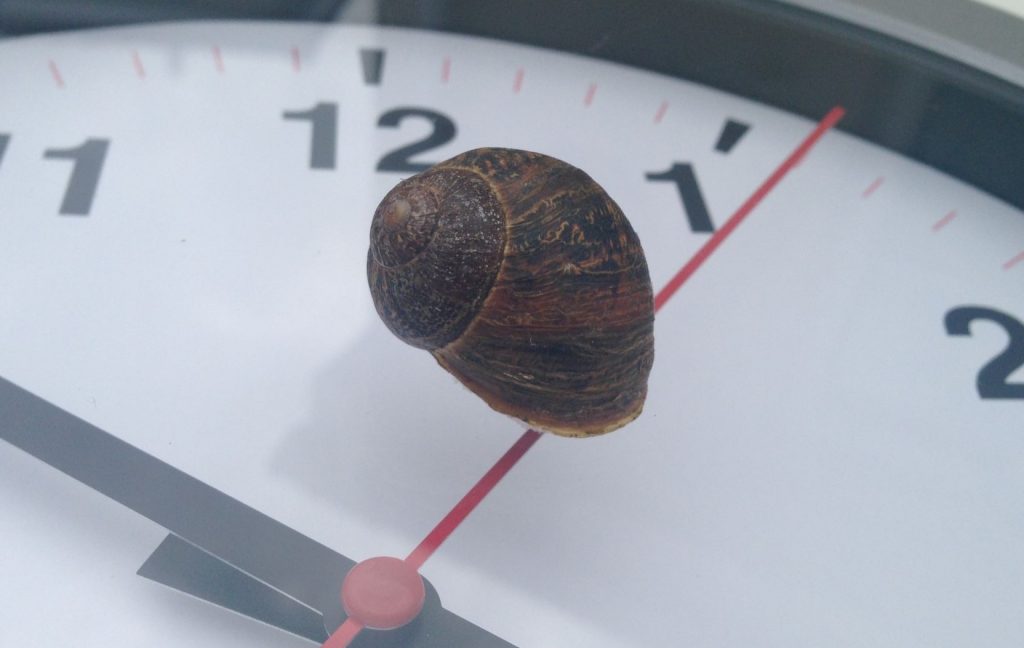
At the start of a coaching session I always ask my clients how they have got on with the goal and actions that they had identified and set themselves at our last meeting. In truth I’m just as interested in what they haven’t done as what they have. Conscious or unconscious, neglected actions are always significant.
Sometimes an action becomes obsolete in the light of new information that takes the client down another route. This is common and to be expected. Less common is the genuine crisis that has occurred – I consider, ‘I broke my leg’ to be a legitimate excuse for example, (although I remember once saying something similar to a friend who, clearly annoyed by my lack of communication, asked if there was anything wrong with my (texting) thumb and forefinger.)
The reason that interests me most as a coach though, are those neglected actions that evidence some level of procrastination – when you don’t do what you said you would, even if you know it will benefit you. There’s only ever one real reason for procrastination and that’s that you don’t want to do it – or at least, not enough. We always find time to do the things we want to.
I have empathy with this. I have well-honed procrastination skills myself and if it wasn’t for my personal coach and supervisor, who don’t let me get away with anything, you would be able to accuse me of hypocrisy. One advantage for me is that it makes me particularly good at spotting procrastination in others.
For those who fear making decisions, procrastination has its uses. Wait long enough and the situation may go away. As I used to say regularly to the school leavers I worked with who ‘just wanted a job’ and were reluctant to apply for college as a plan B, ‘Not making a decision does eventually become a decision’. Missed opportunities are just one consequence of procrastination.
More serious consequences might arise, for example, by not dealing with money issues or debt; not having those ‘crucial conversations’ with colleagues or a loved one; or not seeking out medical advice when we know we have a worrying health symptom. Clients will sometimes confess to being ‘lazy’. This is rarely true. People who are motivated enough to seek out a coach and pay for their services usually have a good measure of motivation for change. Something else is going on.
Most often though, the root of procrastination is fear. Being out of our comfort zone is uncomfortable, unsettling and potentially stressful – examples such as asking for information or help, or trying something new, or speaking to people we don’t know (or don’t like or who scare us), or going to places that are unfamiliar, are all things that potentially make us feel vulnerable. In coaching, we refer to this as being in the ‘stretch zone’ and to be perfectly frank, this is where we want our clients to be (at least some of the time). There’s limited growth without it.
Rather than focussing on the fear though, and its accompanying emotions, we encourage our clients to envisage and think about the benefits of being on the other side – the resulting opportunities, possibilities, joy (and of course relief); and ultimately finding out things about themselves in the process that equips them with the confidence and motivation to keep going towards their goal. Susan Jeffers in ‘Feel the Fear and do it anyway’ was one of the earliest self-help psychologists to pioneer the idea that we can train ourselves out of our old thought patterns. She recommended developing a new mantra – ‘I can handle it’ (‘it’ being whatever you’re facing at the time).
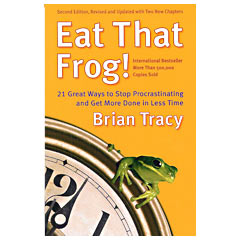
Brian Tracy’s international bestseller on getting organised, recommends ‘Eating the Frog’ – doing the distasteful thing first and getting it out of the way, especially if it’s something that once tackled has the potential to make a huge difference. And that’s an important point to make – I’m not talking about catching up with the housework or tidying your desk (although sometimes these are good things to do). No, these are the significant things that, once tackled, can move us on in all sorts of ways.
So if, as you’ve read this, there’s a niggling suspicion in the back of your head that I’m talking to you personally, here’s an anti-procrastination tool for you to try: 5 questions and an activation. Try it now – eat those frogs – and if you want some accountability – let me know when you’ve done something!
Five Questions:
- What am I procrastinating over? (make a list in order of importance)
- What are each of these procrastinations costing me? (not necessarily financial)
- What are the benefits of getting these sorted? (ie. How important?)
- What will happen if I don’t take action?
- Which procrastination, if I took some action, could potentially have the biggest impact on my life?
Activation:
Choose a procrastination and break it down into tiny small steps (make a list). Decide what you’re going to do first and when. Put the dates in your diary/in your phone. Stick the list on your mirror (or something else creative). Ask someone to keep you accountable. Remind yourself that keeping promises to yourself is a key value. Repeat to yourself ‘I can handle this’. Eat that Frog. Reward yourself when completed if that will help. Keep in mind how great you will feel when it’s done and the benefits you will be able to enjoy as a result. Cross it off the list when it’s done. Now how do you feel?
Resources:
- “Feel the Fear and do it anyway” by Susan Jeffers: https://susanjeffers.com
- “Eat that Frog: Get more of the important things done today” by Brian Tracy: https://www.briantracy.com
This is fab! All rather close to home…